Buy apps-programmierung.eu ?
We are moving the project
apps-programmierung.eu .
Are you interested in purchasing the domain
apps-programmierung.eu ?
domain@kv-gmbh.de · 0541-91531010
Buy apps-programmierung.eu ?
What are the differences between covalent bonds, metallic bonds, and ionic bonds?
Covalent bonds are formed when two atoms share electrons, resulting in a strong bond between the atoms. Metallic bonds occur between metal atoms, where the electrons are delocalized and free to move throughout the structure, creating a strong bond. Ionic bonds are formed between a metal and a nonmetal, where one atom transfers electrons to the other, resulting in the formation of positively and negatively charged ions that are attracted to each other. Overall, covalent bonds involve electron sharing, metallic bonds involve electron delocalization, and ionic bonds involve electron transfer. **
Do CO bonds form with other CO bonds?
No, CO bonds do not typically form with other CO bonds. Carbon monoxide (CO) is a stable molecule with a triple bond between the carbon and oxygen atoms. This triple bond is strong and does not readily form additional bonds with other CO molecules. Instead, CO molecules tend to interact with other types of molecules through various types of chemical reactions. **


Similar search terms for Bonds
Top-Angebote
Products related to Bonds:
-
milk_shake Everlasting Bonds Leave In Treatment 100mLA hair-care product. It a lightweight leave-in treatment designed to enhance your hair's softness, shine, and manageability without adding weight. This innovative formula provides heat protection up to 230°C, making it ideal for styling while addressing hair damage and promoting a healthier appearance.31,97 £*Shipping: 5,34 £Secure redirect to the provider
-
milk_shake Everlasting Bonds Shampoo for Damaged Hair 300mLA shampoo. Everlasting Bonds Shampoo is a transformative hair care solution designed to restore strength, softness, and resilience to damaged and stressed hair. This gentle yet effective cleanser not only repairs weakened hair bonds but also removes impurities without stripping the hair of its natural moisture.23,98 £*Shipping: 7,11 £Secure redirect to the provider
-
Inspired Finds Eternal Bonds Personalized Acrylic Photo Frame & Custom Couple Plaque Gift warm LightCapture Your Timeless Connection. Turn your most meaningful moments into a lasting keepsake with this elegant personalized acrylic photo frame. Designed specifically for couples who value memories that matter, this sleek, transparent display piece...110,99 $*Shipping: 0,00 $Secure redirect to the provider
-
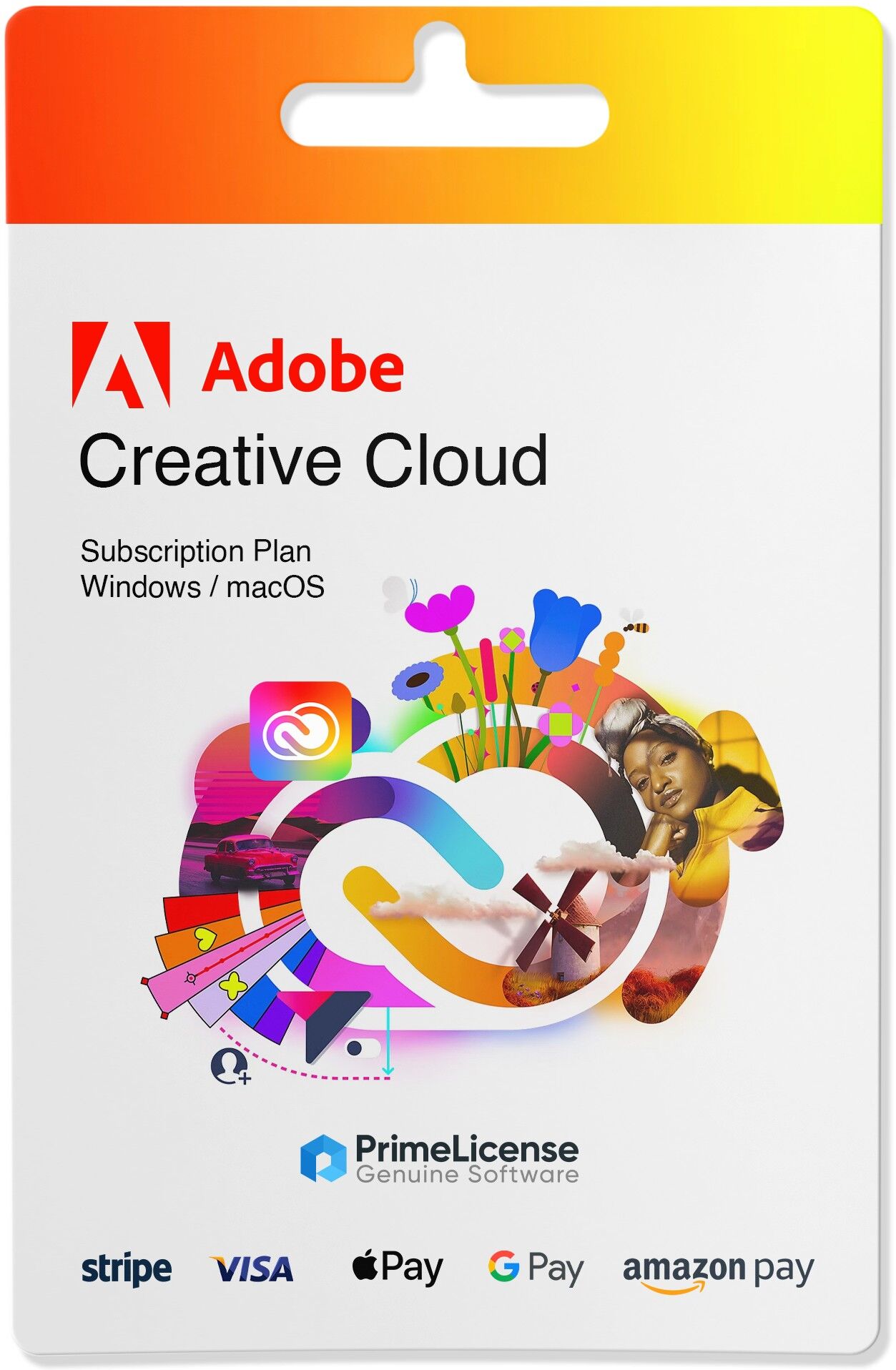
Adobe Creative Cloud - All apps - 1 YearAdobe Creative Cloud is a comprehensive collection of applications and services that gives subscribers access to all of Adobe's finest offerings. From graphic design to video editing: everything managed through an application or the Adobe website. This licence is for activation on an Adobe Account in Europe or the United States. Please contact us for more details about how to redeem it in your region. IMPORTANT: Codes for 1 month and 3 months can be redeemed a maximum of 1 times per code type and per account. If you frequently renew with these solutions, we recommend changing your Adobe Account to avoid exceeding the limit. Delivery note: licences for 1 month and 3 month subscriptions are delivered immediately by email. For 1 year subscription licences, delivery may take up to 24 hours. What's included in the Adobe Creative Cloud All Apps subscription? The Adobe Creative Cloud Pro licence is available as a subscription for 1 month, 3 months or 1 year and is compatible with Windows and macOS. The Adobe package includes the following features and applications: Access for 1 user across 2 devices 100 GB of cloud storage with Adobe All Adobe Creative Suite applications: Photoshop, After Effects, Adobe Fresco, Media Encoder, Premiere, Dreamweaver, Lightroom Classic, Illustrator, Adobe Firefly, Audition, Animate, Bridge, Adobe Express, Lightroom, Capture, InDesign, Acrobat Reader, Photoshop Express, Fill & Sign, Acrobat Pro, Character Animator, Adobe Scan. Why choose Adobe Creative Cloud All Apps? Adobe Cloud All Apps is the complete package for creative professionals who use multiple Adobe software tools in their workflow. With a single subscription, you get access to over 20 applications: from Photoshop to Premiere Pro, from Illustrator to After Effects, without having to purchase separate licences for each programme. Compared to single-app plans (Photoshop Plan, Lightroom Plan), the All Apps package (also known as Creative Cloud Pro) solves the "creative silo" problem: professionals working on photography, graphics and video can switch between tools without managing separate subscriptions. Additionally, the 100 GB of Adobe cloud storage included and access to Adobe Fonts make the workflow even more integrated. The subscription also includes Adobe Firefly: Adobe's generative AI model available directly within Photoshop, Illustrator and Premiere Pro. This integration is exclusive to Adobe Creative Cloud subscribers and is not available in lower-tier single-app plans. Creative Cloud for Mac Adobe has designed Creative Cloud applications to be compatible with macOS; therefore, all major Creative Cloud applications, such as Photoshop, Illustrator, Premiere Pro and InDesign, run perfectly on Mac. You can download and install Creative Cloud applications on your Mac through the Creative Cloud desktop application, which manages all Adobe software installations, updates and licences. Before downloading, make sure your Mac meets the system requirements for each...343,90 £*Shipping: 0,00 £Secure redirect to the provider



-
Why are intermolecular bonds weaker than electron pair bonds?
Intermolecular bonds are weaker than electron pair bonds because they involve interactions between molecules rather than within a single molecule. In intermolecular bonds, the attractive forces between molecules are generally weaker than the covalent bonds that hold atoms together within a molecule. Additionally, intermolecular bonds are typically temporary and can be easily broken, whereas electron pair bonds are strong and stable. Overall, the weaker nature of intermolecular bonds allows molecules to move and interact with each other more freely. **
-
Why are intermolecular bonds generally weaker than covalent bonds?
Intermolecular bonds are generally weaker than covalent bonds because they involve interactions between molecules rather than within a single molecule. Covalent bonds involve the sharing of electrons between atoms, creating strong bonds within a molecule. In contrast, intermolecular bonds, such as hydrogen bonds or van der Waals forces, are weaker because they are based on temporary interactions between molecules, which can be easily broken. Additionally, intermolecular bonds are influenced by factors such as distance and orientation, further contributing to their weaker nature compared to covalent bonds. **
-
Why are intermolecular bonds typically weaker than covalent bonds?
Intermolecular bonds are typically weaker than covalent bonds because they involve interactions between molecules rather than within a single molecule. In intermolecular bonds, the attractive forces between molecules, such as van der Waals forces or hydrogen bonding, are weaker than the strong sharing of electrons in covalent bonds. Additionally, intermolecular bonds are more easily broken or disrupted by changes in temperature or pressure, leading to lower bond energies compared to covalent bonds. **
-
Why are intermolecular bonds generally weaker than electron pair bonds?
Intermolecular bonds are generally weaker than electron pair bonds because they involve interactions between molecules, which are larger and less localized than the interactions between atoms in a covalent bond. In intermolecular bonds, the attractive forces are typically weaker due to the larger distance between molecules and the lack of direct sharing of electrons. In contrast, electron pair bonds involve the sharing of electrons between atoms, leading to stronger and more localized bonding interactions. **


Why are intermolecular bonds typically weaker than electron pair bonds?
Intermolecular bonds are typically weaker than electron pair bonds because they involve interactions between molecules rather than within a single molecule. In intermolecular bonds, the attractive forces between molecules are generally weaker than the covalent bonds that hold atoms together within a molecule. Additionally, intermolecular bonds are usually based on weaker forces such as van der Waals forces, hydrogen bonding, or dipole-dipole interactions, which are not as strong as the sharing or transfer of electrons in covalent or ionic bonds. **
Why are polar bonds lower in energy than nonpolar bonds?
Polar bonds are lower in energy than nonpolar bonds because they involve the unequal sharing of electrons between two atoms with different electronegativities. This unequal sharing creates a dipole moment, which results in an attractive force between the partially positive and partially negative ends of the molecule. This electrostatic attraction lowers the overall energy of the molecule compared to nonpolar bonds, where electrons are shared equally. As a result, polar bonds are typically stronger and more stable than nonpolar bonds. **
Top-Angebote
Products related to Bonds:
-
milk_shake Everlasting Bonds Repair Conditioner 250mLA conditioner. Everlasting Bonds Conditioner is designed to nourish, strengthen, and restore softness to normal to mildly damaged hair. This lightweight bond-repair conditioner provides healthier, smoother-looking results while addressing key hair concerns. Transform your hair with our bond-repair technology for visibly healthier results.30,83 £*Shipping: 7,11 £Secure redirect to the provider
-
milk_shake Everlasting Bonds Concentrated Hair Mask 120mLA hair mask. This rich formula transforms hair, leaving it smoother, stronger, and visibly healthier after each use. Ideal for addressing severe damage, it provides deep nourishment without weighing hair down. Instantly rebuilds weakened hair bonds. Deeply nourishes without heaviness. Boosts softness and intense shine.30,83 £*Shipping: 5,34 £Secure redirect to the provider
-
milk_shake Everlasting Bonds Leave In Treatment 100mLA hair-care product. It a lightweight leave-in treatment designed to enhance your hair's softness, shine, and manageability without adding weight. This innovative formula provides heat protection up to 230°C, making it ideal for styling while addressing hair damage and promoting a healthier appearance.31,97 £*Shipping: 5,34 £Secure redirect to the provider
-
milk_shake Everlasting Bonds Shampoo for Damaged Hair 300mLA shampoo. Everlasting Bonds Shampoo is a transformative hair care solution designed to restore strength, softness, and resilience to damaged and stressed hair. This gentle yet effective cleanser not only repairs weakened hair bonds but also removes impurities without stripping the hair of its natural moisture.23,98 £*Shipping: 7,11 £Secure redirect to the provider
-
What are the differences between covalent bonds, metallic bonds, and ionic bonds?
Covalent bonds are formed when two atoms share electrons, resulting in a strong bond between the atoms. Metallic bonds occur between metal atoms, where the electrons are delocalized and free to move throughout the structure, creating a strong bond. Ionic bonds are formed between a metal and a nonmetal, where one atom transfers electrons to the other, resulting in the formation of positively and negatively charged ions that are attracted to each other. Overall, covalent bonds involve electron sharing, metallic bonds involve electron delocalization, and ionic bonds involve electron transfer. **
-
Do CO bonds form with other CO bonds?
No, CO bonds do not typically form with other CO bonds. Carbon monoxide (CO) is a stable molecule with a triple bond between the carbon and oxygen atoms. This triple bond is strong and does not readily form additional bonds with other CO molecules. Instead, CO molecules tend to interact with other types of molecules through various types of chemical reactions. **
-
Why are intermolecular bonds weaker than electron pair bonds?
Intermolecular bonds are weaker than electron pair bonds because they involve interactions between molecules rather than within a single molecule. In intermolecular bonds, the attractive forces between molecules are generally weaker than the covalent bonds that hold atoms together within a molecule. Additionally, intermolecular bonds are typically temporary and can be easily broken, whereas electron pair bonds are strong and stable. Overall, the weaker nature of intermolecular bonds allows molecules to move and interact with each other more freely. **
-
Why are intermolecular bonds generally weaker than covalent bonds?
Intermolecular bonds are generally weaker than covalent bonds because they involve interactions between molecules rather than within a single molecule. Covalent bonds involve the sharing of electrons between atoms, creating strong bonds within a molecule. In contrast, intermolecular bonds, such as hydrogen bonds or van der Waals forces, are weaker because they are based on temporary interactions between molecules, which can be easily broken. Additionally, intermolecular bonds are influenced by factors such as distance and orientation, further contributing to their weaker nature compared to covalent bonds. **
Similar search terms for Bonds
-
Inspired Finds Eternal Bonds Personalized Acrylic Photo Frame & Custom Couple Plaque Gift warm LightCapture Your Timeless Connection. Turn your most meaningful moments into a lasting keepsake with this elegant personalized acrylic photo frame. Designed specifically for couples who value memories that matter, this sleek, transparent display piece...110,99 $*Shipping: 0,00 $Secure redirect to the provider
-
Adobe Creative Cloud - All apps - 1 YearAdobe Creative Cloud is a comprehensive collection of applications and services that gives subscribers access to all of Adobe's finest offerings. From graphic design to video editing: everything managed through an application or the Adobe website. This licence is for activation on an Adobe Account in Europe or the United States. Please contact us for more details about how to redeem it in your region. IMPORTANT: Codes for 1 month and 3 months can be redeemed a maximum of 1 times per code type and per account. If you frequently renew with these solutions, we recommend changing your Adobe Account to avoid exceeding the limit. Delivery note: licences for 1 month and 3 month subscriptions are delivered immediately by email. For 1 year subscription licences, delivery may take up to 24 hours. What's included in the Adobe Creative Cloud All Apps subscription? The Adobe Creative Cloud Pro licence is available as a subscription for 1 month, 3 months or 1 year and is compatible with Windows and macOS. The Adobe package includes the following features and applications: Access for 1 user across 2 devices 100 GB of cloud storage with Adobe All Adobe Creative Suite applications: Photoshop, After Effects, Adobe Fresco, Media Encoder, Premiere, Dreamweaver, Lightroom Classic, Illustrator, Adobe Firefly, Audition, Animate, Bridge, Adobe Express, Lightroom, Capture, InDesign, Acrobat Reader, Photoshop Express, Fill & Sign, Acrobat Pro, Character Animator, Adobe Scan. Why choose Adobe Creative Cloud All Apps? Adobe Cloud All Apps is the complete package for creative professionals who use multiple Adobe software tools in their workflow. With a single subscription, you get access to over 20 applications: from Photoshop to Premiere Pro, from Illustrator to After Effects, without having to purchase separate licences for each programme. Compared to single-app plans (Photoshop Plan, Lightroom Plan), the All Apps package (also known as Creative Cloud Pro) solves the "creative silo" problem: professionals working on photography, graphics and video can switch between tools without managing separate subscriptions. Additionally, the 100 GB of Adobe cloud storage included and access to Adobe Fonts make the workflow even more integrated. The subscription also includes Adobe Firefly: Adobe's generative AI model available directly within Photoshop, Illustrator and Premiere Pro. This integration is exclusive to Adobe Creative Cloud subscribers and is not available in lower-tier single-app plans. Creative Cloud for Mac Adobe has designed Creative Cloud applications to be compatible with macOS; therefore, all major Creative Cloud applications, such as Photoshop, Illustrator, Premiere Pro and InDesign, run perfectly on Mac. You can download and install Creative Cloud applications on your Mac through the Creative Cloud desktop application, which manages all Adobe software installations, updates and licences. Before downloading, make sure your Mac meets the system requirements for each...343,90 £*Shipping: 0,00 £Secure redirect to the provider
-
Adobe Creative Cloud All Apps - 3 month subscriptionYou can only use 2 codes per account! This product does not allow you to renew your current subscription. To redeem the code, the current subscription must first expire. The code must be activated immediately after purchase! Discover the universe of creativity with the Adobe Creative Cloud All Apps subscription for 3 months. This subscription gives you unlimited access to a wide range of cutting-edge software designed to enhance your creative abilities in every artistic field. Adobe Creative Cloud includes essential tools such as Photoshop for advanced photo editing, Illustrator for flawless vector illustrations, InDesign for professional layouts, Premiere Pro for high-quality video editing and After Effects for stunning visual effects. You will obtain a key to redeem on your account valid for 3 months. The 3-month subscription guarantees you not only access to the latest versions of all apps, but also constant updates to keep you up-to-date with the latest features and tools. In addition, you get 100GB of cloud storage space to manage your projects securely and easily share your work with collaborators and clients. With Creative Cloud Libraries, you can easily manage your creative assets and synchronise them across all devices. Whether you are a graphic designer, photographer, video maker or web professional, Adobe Creative Cloud provides integrated solutions that adapt to your every need, enabling you to work efficiently and collaborate effortlessly. Take advantage of the advanced features, available training resources, and global community of creatives to expand your knowledge and enhance your skills. With Adobe Creative Cloud, there are no limits to your imagination: turn every project into a work of art with tools that guarantee quality and precision. Here are some of the key programmes included: Photoshop: image editing and graphic design software. Illustrator: vector graphics and illustration software. InDesign: desktop publishing software for creating layouts for printed and digital media. Premiere Pro: professional video editing software. After Effects: animated graphics and visual effects software. Lightroom: photo retouching and organisation software. Acrobat Pro DC: PDF creation and editing tool. XD: UI/UX design and prototyping tool. Dreamweaver: web design and development tool. Anima: software for 2D animations and interactive content. Audition: audio editing and mixing software. Bridge: digital asset management tool. Media Encoder: video encoding and multimedia conversion tool. Fresco: digital painting and drawing software. Dimension: 3D design and rendering tool. Character Animator: animation software for character creation. Spark: web-based tool for creating graphics for social media, web pages and short videos. Adobe Fonts: access to a font library for your projects. Premiere Rush: simplified video editing tool for mobile and desktop devices. Don't miss this opportunity: subscribe now and take your creativity to new horizons...103,75 £*Shipping: 0,00 £Secure redirect to the provider
-
Inspired Finds Eternal Bonds Personalized Acrylic Photo Frame & Custom Couple Plaque Gift 7 Colors LightCapture Your Timeless Connection. Turn your most meaningful moments into a lasting keepsake with this elegant personalized acrylic photo frame. Designed specifically for couples who value memories that matter, this sleek, transparent display piece...116,99 $*Shipping: 0,00 $Secure redirect to the provider
-
Why are intermolecular bonds typically weaker than covalent bonds?
Intermolecular bonds are typically weaker than covalent bonds because they involve interactions between molecules rather than within a single molecule. In intermolecular bonds, the attractive forces between molecules, such as van der Waals forces or hydrogen bonding, are weaker than the strong sharing of electrons in covalent bonds. Additionally, intermolecular bonds are more easily broken or disrupted by changes in temperature or pressure, leading to lower bond energies compared to covalent bonds. **
-
Why are intermolecular bonds generally weaker than electron pair bonds?
Intermolecular bonds are generally weaker than electron pair bonds because they involve interactions between molecules, which are larger and less localized than the interactions between atoms in a covalent bond. In intermolecular bonds, the attractive forces are typically weaker due to the larger distance between molecules and the lack of direct sharing of electrons. In contrast, electron pair bonds involve the sharing of electrons between atoms, leading to stronger and more localized bonding interactions. **
-
Why are intermolecular bonds typically weaker than electron pair bonds?
Intermolecular bonds are typically weaker than electron pair bonds because they involve interactions between molecules rather than within a single molecule. In intermolecular bonds, the attractive forces between molecules are generally weaker than the covalent bonds that hold atoms together within a molecule. Additionally, intermolecular bonds are usually based on weaker forces such as van der Waals forces, hydrogen bonding, or dipole-dipole interactions, which are not as strong as the sharing or transfer of electrons in covalent or ionic bonds. **
-
Why are polar bonds lower in energy than nonpolar bonds?
Polar bonds are lower in energy than nonpolar bonds because they involve the unequal sharing of electrons between two atoms with different electronegativities. This unequal sharing creates a dipole moment, which results in an attractive force between the partially positive and partially negative ends of the molecule. This electrostatic attraction lowers the overall energy of the molecule compared to nonpolar bonds, where electrons are shared equally. As a result, polar bonds are typically stronger and more stable than nonpolar bonds. **
* All prices are inclusive of VAT and, if applicable, plus shipping costs. The offer information is based on the details provided by the respective shop and is updated through automated processes. Real-time updates do not occur, so deviations can occur in individual cases. ** Note: Parts of this content were created by AI.